Our office will be closed on Tuesday, November 3, 2026 in observance of Election Day.
One of the first questions I hear from patients looking into veneers in Epping, NH, is whether they should get traditional porcelain veneers or no-prep veneers. We offer both at Brentwood Dental Designs, so let's take a look at how they compare.
Choosing between them comes down to how much, if at all, your natural teeth need to change to get the result you want.
Before
After
Thickness and Materials
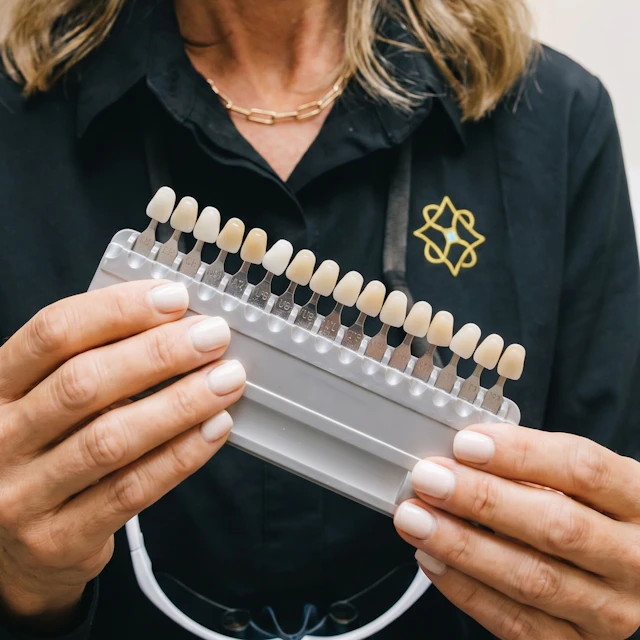
Both are thin shells bonded to the front of your teeth to change their color, shape, or size. Veneers can improve the appearance of teeth that are discolored and don’t respond to whitening, teeth that are chipped or worn, minor crookedness, and small gaps. The difference is in thickness and in how the tooth is prepared.
Traditional porcelain veneers need a small amount of room. For the veneers I place, a thin layer of enamel is gently reshaped so the veneer fits. Each one is color-matched and contoured to look natural and last.
No-prep veneers are thinner, and they are usually placed without removing a portion of the tooth.
What Changes for Your Teeth
Because traditional veneers involve reshaping enamel, they are considered a permanent treatment. Once the enamel has been altered, there’s no going back to the tooth’s original shape.
No-prep veneers are considered semipermanent. They can be removed with minimal damage to the tooth underneath. The enamel surface may still be lightly etched before bonding, but the tooth itself keeps its shape.
That makes no-prep appealing for patients who want to keep as much natural tooth as possible, though it works best within certain limits. Here is how the two compare side by side.
While these are general pros and cons, of course your individual bite pattern, preferences, and more will shape the best choice for you.
TekScan and CBCT Imaging
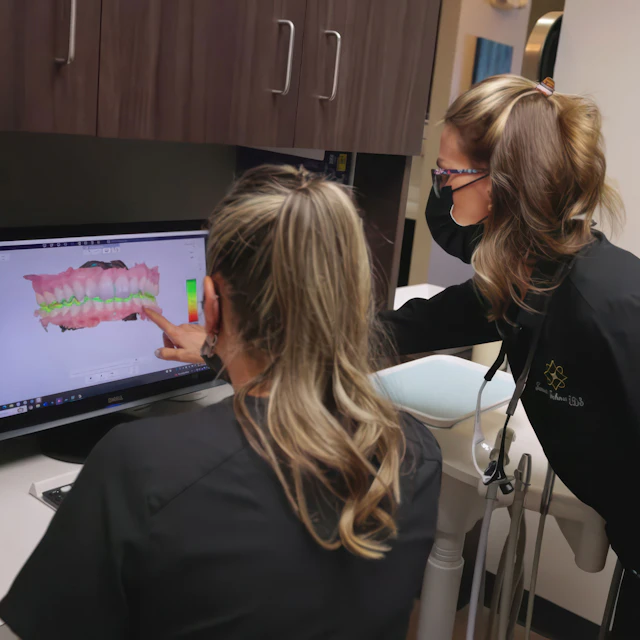
Whichever type you’re leaning toward, I look at more than the front of your teeth. When I design veneers, I consider your bite alignment, facial symmetry, and airway along with the look you want.
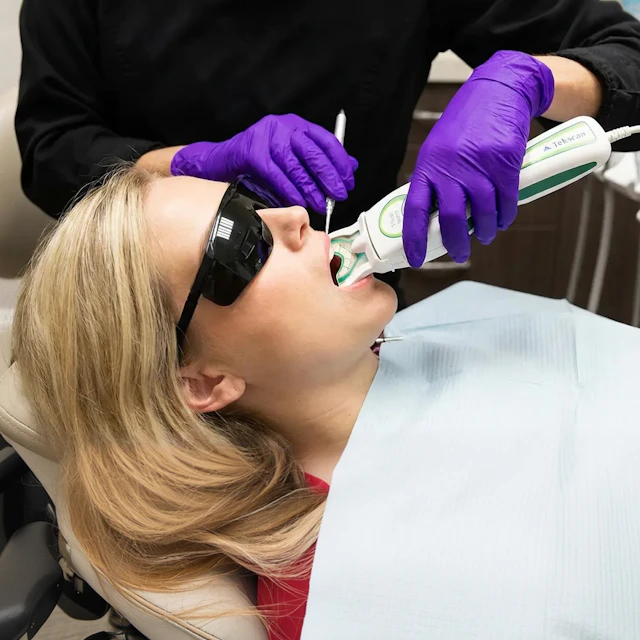
I use CBCT 3D imaging and TekScan® bite analysis, which measures the forces where your teeth meet, as part of planning a smile.
If you grind your teeth, that matters for any veneer. In one clinical study of porcelain veneers, most of the fractures and most of the veneers that came loose were in patients with a grinding habit, and wearing an occlusal splint appeared to reduce fractures. I recommend a night guard for patients who grind to help protect their veneers.
I also screen every patient to make sure veneers are the right choice, and healthy teeth and gums are a starting point. If bonding, whitening, or Invisalign® would serve you better, I’ll tell you so we can explore the option that is right for you.
From Consultation to Final Polish
The steps are similar for both types. The main difference is how much happens to your teeth before the veneers are made.
Most patients find the process easy and experience little to no discomfort.
First visit
Your Consultation and Exam
We start with a detailed evaluation of your teeth and your overall health, and talk about what you’d like to change. This is where we decide together whether traditional or no-prep veneers fit your goals and your starting point.
Treatment visit
Preparation and Impressions
For traditional veneers, I gently reshape a thin layer of enamel, keeping as much of your natural tooth as possible. Then we take precise digital impressions so your veneers can be modeled to fit.
For no-prep veneers, this visit is shorter, because little or no reshaping is needed before impressions. Since the teeth keep their shape, temporary veneers usually aren’t needed either.
Between visits
Custom Fabrication
Your veneers are then handcrafted. Traditional veneers are made by our partner ceramists from biocompatible porcelain, chosen to work with both your oral and overall health, and matched so they look like natural teeth. Our no-prep veneers are made by Utah Valley Dental Lab. Lab work generally takes a few weeks.
Final visit
Placement, Bonding, and Polishing
I bond each veneer in place with a biocompatible adhesive and adjust the fit so your bite feels comfortable. A final polish gives your veneers a natural finish.
Stains, Flossing, and Night Guards
Porcelain resists staining from coffee, wine, and everyday foods, but your natural teeth around the veneers can still stain. Brush with a non-abrasive toothpaste, floss daily, and keep up with your regular checkups. If you grind your teeth, wear your night guard.
Any veneer can make the area along the gumline a little harder to clean, especially if the edge doesn’t sit flush. That’s one more reason a precise fit and regular checkups matter.
Before
After
You don’t need to decide between traditional and no-prep veneers before you come in. Bring your questions, and we’ll look at your teeth, your bite, and your goals together, then talk through which option makes sense for you and why.
If cost is part of the decision, ask us about our financing options.
At Brentwood Dental Designs, we are passionate about helping patients achieve great whole-body systemic and oral health. The first naturopathic and board-certified integrative dentist in New Hampshire, Dr. Tamatha Johnson uses only the safest materials and techniques, including ozone therapy, fluoride alternatives, and more. She is highly trained, committed to continuing education, and affiliated with the:
Come experience how different dental care can be. Call us today at (603) 679-3679 or book a consultation online.
1 Brickyard Square
Suite 5
Epping,
NH 03042
Loading hours...
Our office will be closed on Tuesday, November 3, 2026 in observance of Election Day.